 Leadership
 Awards & Recognitions
 Industry Associates
 News
News Locations
 Careers
  Ethics & Sustainability
  Contact Us
 Resources
 Customer Community
  Events
 Customer Portal


Popular Modules, Services & Solutions
CHU Brugmann
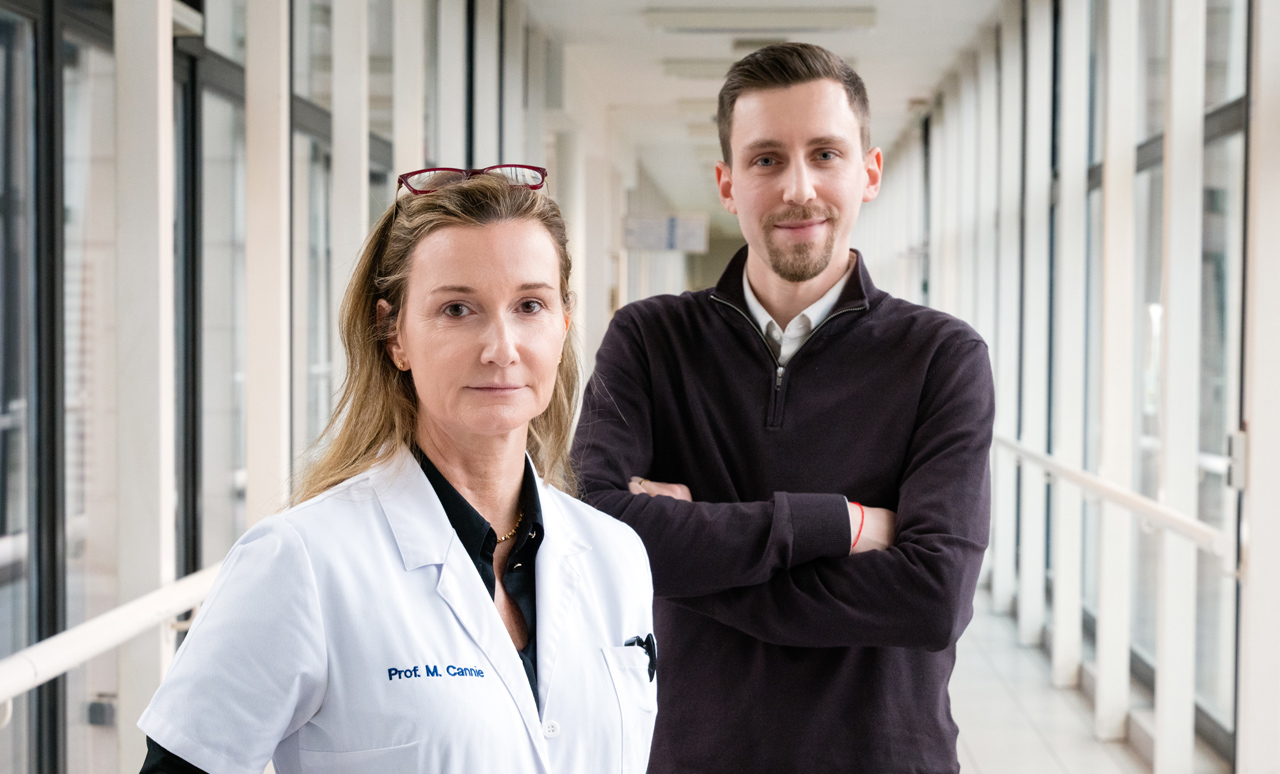
Less noise, more flow: how CHU Brugmann is making its medical imaging future-ready with AGFA HealthCare
A single platform combining Enterprise Imaging and a VNA brings images, disciplines and people together. The result? Greater efficiency, transparency and confidence at every step of the care pathway.
In recent years, the radiology and medical imaging department of the Brugmann University Hospital Center (CHU Brugmann) in Brussels faced a serious challenge: the existing imaging infrastructure no longer met the functional and technical requirements of a modern, multidisciplinary care environment.
“We needed a flexible, user-friendly solution that would better support our workflow and facilitate interdisciplinary collaboration,” explains Prof. Mieke Cannie, Head of the Medical Imaging Department and Head of the Radiology Department.
The situation was just as problematic on the IT side: “The underlying infrastructure was obsolete. We wanted a system that not only supported radiology, but that would also enable image management at the hospital level, with a modern architecture, good performance, and strong integration with the electronic health record (EHR) and other systems,” describes Bryan Miller, IT Application Manager for Medical Imaging.
The decision to choose Enterprise Imaging: continuity and confidence
After an in-depth evaluation, the hospital decided to continue working with AGFA HealthCare, implementing the Enterprise Imaging platform together with a vendor-neutral archive (VNA) hospital-wide. The decision was based not only on technological considerations, but also on the years of partnership with AGFA HealthCare that created a strong environment of trust.
“We have worked with AGFA HealthCare since the late 1990s,” explains Bryan Miller. “We first used their radiology information system (RIS), then their PACS. So we are very familiar with their way of working, the quality of their 24/7 support, and their commitment to actively seeking solutions. Continuing our collaboration was thus an obvious choice.”
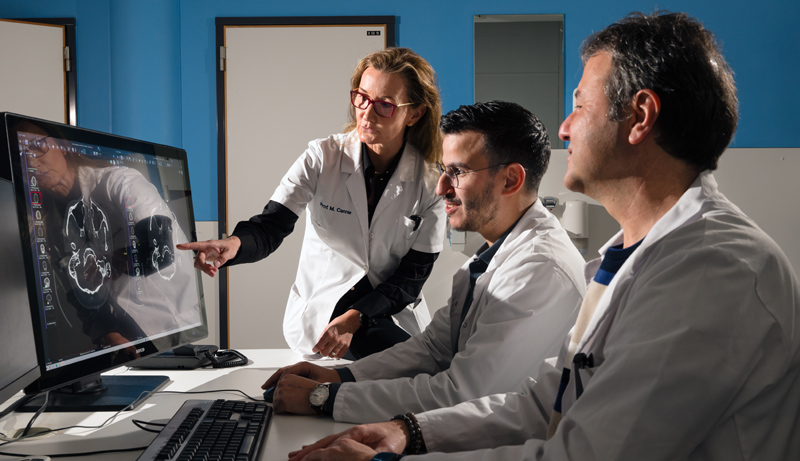
For the radiologists, Enterprise Imaging also offered the ability to redesign the department around modern, streamlined workflows. “We tested the first version of Enterprise Imaging back in 2015,” explains Prof. Mieke Cannie. “The technology has evolved substantially since then. Today, the platform delivers all the functionalities we need: an integrated approach to image management, structured reporting, flexible task distribution, specific workflows for sub-specialties, efficient collaboration and remote access. In other words, a forward-looking solution that meets both our current and future needs.”
A structured and phased implementation
Knowing that the implementation of a new image management environment would have a major impact on both IT and clinical workflows, the project was approached in a step-by-step way, with close collaboration between the hospital’s IT department and AGFA HealthCare.
“The migration was technically complex, but our progressive approach and detailed preparation enabled us to roll it out in a structured way,” explains Bryan Miller. “We completely modernized the infrastructure, with powerful servers and storage solutions. The new architecture is more flexible, scalable and secure. We are already seeing significant improvements in speed, stability and availability.”
CHU Brugmann also emphasized improving integrations with other systems, such as the EHR, RIS and external distribution platforms. “The open architecture and support for a wide range of interoperability standards enabled us to smoothly integrate third-party applications and AI solutions. Of course, we encountered challenges along the way, but AGFA HealthCare was always very responsive, closely following up on issues, providing consistent feedback, and delivering appropriate solutions,” continues Bryan Miller.
Within the medical imaging department as well, the introduction of the new environment was seamless. “Change is always a challenge, especially when people have worked with the same tools for a long time,” Prof. Mieke Cannie continues. “But thanks to the efficient support from both AGFA HealthCare and our own IT Department, the transition was remarkably smooth. The user-friendly interface is appreciated by both our younger and our more experienced radiologists.”
Clinical advantages: efficiency, collaboration and quality
The move to Enterprise Imaging has brought significant improvements to the day-to-day flow of the medical imaging department.
- Fast, integrated access to recent and prior images delivers substantial added value.
- Efficient workflows and worklists enable swift retrieval of studies, with access to image processing tools, 3D reconstructions and AI support for certain types of exams.
- Much faster image retrieval significantly reduces interruptions between exams and eliminates unnecessary wait times.
- Distribution of exams is optimized within the team.
- Sectional reporting and hanging protocols provide structured reports and better support for subspecialties such as cardiology and musculoskeletal imaging.
- The configuration of color codes and advanced search functions considerably speeds up image analysis.
- The improved performance of the speech recognition system significantly reduces the effort needed for correcting reports and protocols. This saves both radiologists and administrative staff valuable time, allowing them to focus on other clinical and organizational tasks.
- The ability to work remotely is a substantial added value, especially during on-call shifts or for multidisciplinary collaboration.
- The system’s multilingual capabilities are another advantage for this hospital located on the outskirts of Brussels. With Enterprise Imaging, user settings, voice recognition, reporting and interfaces can be configured in multiple languages.
- Enterprise Imaging also supports the facility’s role as a learning hospital by enhancing the training of students and residents with a clear structure and easy access to educational materials, significantly facilitating the learning process.
“The improvement in efficiency is clear,” states Prof. Mieke Cannie. “The distribution of tasks is more transparent, complex studies are reported more quickly and consistently, residents are supervised more systematically and with greater precision, and collaboration between different sites runs more smoothly.”
Telework improves the quality and safety of care
Telework has been structurally integrated into the radiology operations, delivering a clear twofold benefit. On the one hand, radiologists can (within well-defined quality and safety frameworks) carry out their reporting tasks from home. This allows them to work more flexibly, reduce their commuting burden, and focus more effectively, which contributes to a better quality of life in the face of increasing workloads.
On the other hand, telework also helps improve the quality of diagnostic imaging. The ability to work in a quiet environment improves focus during on-call shifts, resulting in more accurate reading of images and a reduced risk of diagnostic errors.
Remote work is not only an organizational convenience; it’s a deliberate choice that supports both physician well-being and the quality and safety of patient care.
A hospital-wide VNA: images bridging disciplines
The implementation of a hospital-wide VNA is one of the main advantages of the project. It provides CHU Brugmann with centralized management of images coming from different image-producing departments. For the clinicians, it offers a central and unified access point for all medical images, regardless of their source.
Currently, eight departments are integrated in the VNA: radiology, nuclear medicine, cardiology, gastroenterology, neurology, ICU, stomatology and rheumatology. In addition, certain subspecialties within the operating room and gynecology are partially integrated into Enterprise Imaging. Other departments are scheduled for integration: gynecology/obstetrics, urology and ophthalmology.
Immediate access to images for referring physicians and patients
Images can be viewed by clinicians across the hospital on the XERO® Viewer, fully integrated into the EHR. Images can be displayed in both clinical and diagnostic contexts. In addition, XERO® Xtend provides the XERO® Viewer with a comprehensive set of tools tailored to the specific needs of different clinical disciplines.
Images and reports are accessible to external referring physicians and patients via the health portal connected to the Abrumet regional network. The university hospital also has a portal for viewing images using a personal access code.
“Referring physicians can access images and reports almost immediately,” explains Prof. Cannie. “For patients, this means shorter wait times and better communication around their exam.”
IT advantages: simplicity, control and stability
For the IT department, the Enterprise Imaging platform with VNA has considerably simplified system management. “We now work with a single, central platform,” explains Bryan Miller. “This has reduced complexity while improving reporting and monitoring capabilities. Dashboards and logging tools provide an overview of performance and usage, allowing us to intervene more quickly when necessary.”
Bryan Miller also appreciates functionalities such as:
- The user-friendly interface for managing processes
- The extensive configuration options that enable the system to be precisely tailored to specified needs and wants
- The strict access controls and regular updates, which reinforce security and data protection
- The cost savings delivered by lifecycle rules that make data management more efficient and thus enable storage capacity optimization
Bryan Miller highlights two major advantages of the system: its performance and its stability. “The system reacts quickly and efficiently, which is critical given the complexity and scale of our environment. Downtime has become rare, and uptime is now 99.9%, which has a direct impact on the continuity of care.”
Business Intelligence makes data talk
The clinical and technical benefits of the solution are complemented by the Business Intelligence (BI) tools, which play a growing role within CHU Brugmann’s medical imaging department. AGFA HealthCare’s BI tools offer the hospital an objective, real-time overview of activity, performance and workflow efficiency.
“With the BI tools, we finally have a clear and reliable view of the real activity of the department,” comments Prof. Mieke Cannie. “We can track workloads, turnaround times, productivity and capacity utilization with much more precision. This is essential in a context where volumes are increasing but resources aren’t.”
The dashboard functions include:
- Analysis of the number of exams per modality and per subspecialty
- Objective monitoring of wait times and report turnaround times
- Measurement of the impact of organizational choices, such as remote working or task distribution
- Early detection of activity and growth trends
For both IT and management, BI is an important decision-driving tool. “The data from Enterprise Imaging ensures transparency,” explains Bryan Miller. “It helps us to identify bottlenecks, optimize performance and support investment decisions, for example in terms of infrastructure, storage or future implementations of AI.”
By bringing together clinical data, workflow information and technical parameters, BI supports not only operational efficiency but strategic decision-making. It enables continuous operational improvement for different departments based on facts rather than assumptions, and thus reinforces the quality, durability and sustainability of medical imaging at CHU Brugmann.
Next steps
CHU Brugmann’s ambitions do not stop here. In the coming years, the hospital plans to roll out additional integrations, multidisciplinary collaboration enhancements and new AI tools.
“We are already working with AI; for example, we have integrated it into Enterprise Imaging for detecting bone lesions and for diagnosing and treating strokes. This allows the radiologist to see the results side-by-side with the original images in Enterprise Imaging, without needing additional applications. Other third-party tools are also integrated using APIs, enabling the radiologist to open a single application to access all the information centralized in Enterprise Imaging,” explains Bryan Miller.
“AI enhances diagnostic quality and helps us work more efficiently— in emergency situations, but also for radiology residents,” adds Prof. Mieke Cannie. “We are currently evaluating new screening applications for breast and lung cancer, and for image segmentation.”
“Enterprise Imaging gives us a solid foundation for the future,” Prof. Cannie concludes. “The platform is fully capable of handling the constant growth in our volume of medical imaging exams. And now we can continue to develop innovative applications that directly contribute to delivering the best care to our patients.”
The AGFA HealthCare solution at CHU Brugmann:
- Enterprise Imaging for Radiology & Medical Imaging
- VNA
- XERO® Universal Viewer and XERO® Xtend for image processing integrated in the EHR
- Radiology Information System (RIS)
- AGFA HealthCare Scheduling for hospital-wide appointment management
- Enterprise Imaging Business Intelligence advanced edition
Benefits of the solution for medical imaging:
For radiologists:
- Increased efficiency and transparency
- Streamlined workflows with flexible task distribution
- Structured reports
- Enhanced diagnostic quality
- Better collaboration and support for multidisciplinary care
- Remote access
For IT:
- A central, unified platform, simplifying management
- Extensive configuration and integration options
- Improved performance and security
- 99.9% uptime
- Greater visibility and better monitoring
- Cost optimization
For referring clinicians within the hospital:
- A single, central source for viewing all medical images, regardless of their origin, integrated in the EHR
For external referring physicians and patients:
- Almost-immediate access to images and reports via the health portal connected to the Abrumet regional network for Brussels
- Shorter wait times for patients and better communication about their exam
Did you know?
- CHU Brugmann is a university hospital affiliated with the Université Libre de Bruxelles (ULB) and the Vrije Universiteit Brussel (VUB).
- In addition to the Horta site in Laeken, CHU Brugmann also includes the Paul Brien site in Schaerbeek and the Queen Astrid Rehabilitation Unit at the Military Hospital in Neder-Over-Heembeek.
- Together with four other Brussels hospitals, CHU Brugmann forms part of the Iris network, one of the largest hospital networks in Belgium.
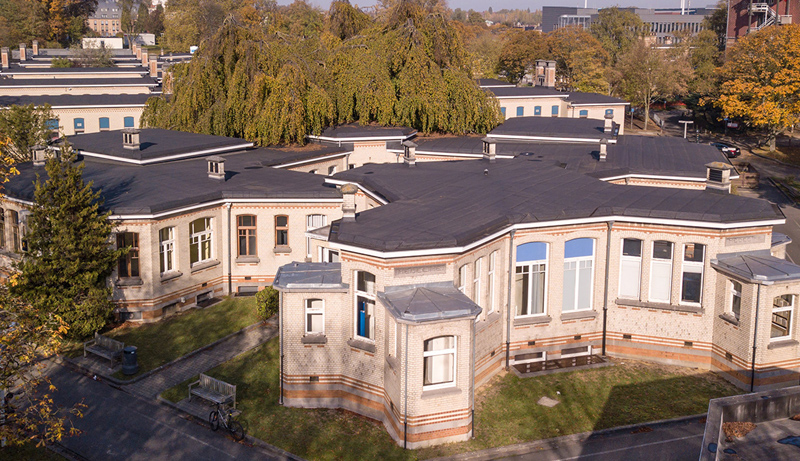
- CHU Brugmann has an impressive history: the hospital complex was first built between 1911 and 1923 in an 18-hectare park to a design by architect Victor Horta, in an eclectic, Art Deco-influenced style. The now century-old hospital continues to adapt and innovate to meet medical and societal evolutions.
Discover the history of CHU Brugmann on: https://www.chu-brugmann.be/notre-histoire.
Today, the platform delivers all the functionalities we need: an integrated approach to image management, structured reporting, flexible task distribution, specific workflows for sub-specialties, efficient collaboration and remote access.
Prof. Mieke Cannie
Head of the Medical Imaging Department and Head of the Radiology Department
Head of the Medical Imaging Department and Head of the Radiology Department
We have worked with AGFA HealthCare since the late 1990s. So we are very familiar with their way of working, the quality of their 24/7 support, and their commitment to actively seeking solutions. Continuing our collaboration was thus an obvious choice.
Bryan Miller
IT Application Manager for Medical Imaging
IT Application Manager for Medical Imaging
The improvement in efficiency is clear. The distribution of tasks is more transparent, complex studies are reported more quickly and consistently, and collaboration between different sites runs more smoothly.
Prof. Mieke Cannie
Head of the Medical Imaging Department and Head of the Radiology Department
Head of the Medical Imaging Department and Head of the Radiology Department
The system reacts quickly and efficiently, which is critical given the complexity and scale of our environment. Downtime has become rare, and uptime is now 99.9%, which has a direct impact on the continuity of care.
Bryan Miller
IT Application Manager for Medical Imaging
IT Application Manager for Medical Imaging
Enterprise Imaging gives us a solid foundation for the future. The platform is fully capable of handling the constant growth in our volume of medical imaging exams. And now we can continue to develop innovative applications that directly contribute to delivering the best care to our patients.
Prof. Mieke Cannie
Head of the Medical Imaging Department and Head of the Radiology Department
Head of the Medical Imaging Department and Head of the Radiology Department

RedSalud
RedSalud consolidates imaging across Chile’s largest private healthcare network with AGFA HealthCare Enterprise Imaging. The single, centralized platform in…

University of Michigan Health – Sparrow – Dr. Olomu
Improved diagnostic confidence Six hospitals, three urgent care units, 115 care sites, four radiology reading groups, and over 485,000…

Innovapuglia
Puglia and AGFA HealthCare lead the way to Italy’s first region-wide RIS/PACS network The SIRDImm (Regional Information System for…